

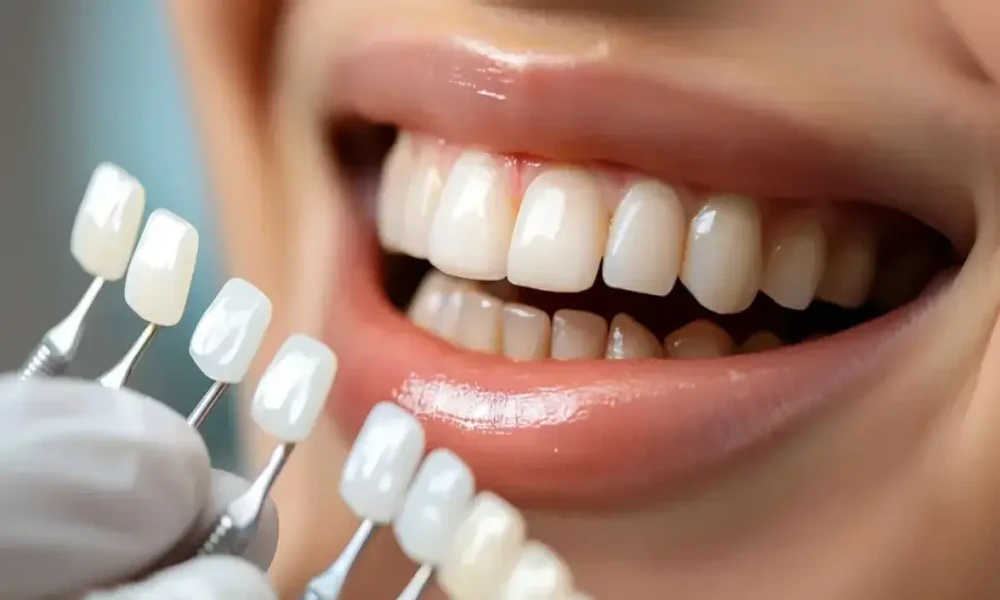
You might be feeling a little self conscious every time you smile. Maybe it started with one chipped tooth in a photo, or some stubborn discoloration that whitening never really fixed. Over time, you begin to smile with your lips closed, or you angle your face away from the camera. It is not that you are vain. You are just tired of feeling like your teeth are the first thing people notice, and not in a good way, and you’re ready to visit a dental office in Woburn, MA to finally change that.
If that sounds familiar, you are not alone. Many people reach a point where they want a noticeable change, but they do not want a mouth full of crowns or a long, painful process. That is usually where veneers come into the conversation. In simple terms, veneers are thin coverings that bond to the front of your teeth to change the way they look. They can change color, shape, and even the appearance of alignment.
So why are veneers for cosmetic dentistry such a popular choice right now. Because when they are planned well, they can offer a strong mix of speed, customization, and long lasting results, without the heavy drilling that many people fear. You get a “new smile” feeling, often in just a few visits, while still keeping most of your natural tooth structure.
Still, that does not mean veneers are right for everyone, or that they are a magic fix. There are tradeoffs, costs, and real health questions to think about. Understanding those pieces calmly and clearly is the best way to decide if veneers fit your life, your budget, and your long term oral health.
What is really bothering you about your smile right now
Before thinking about treatment, it helps to name the problem. For some people, it is color. Years of coffee, tea, wine, or smoking can stain enamel. Even with professional whitening, some teeth simply will not brighten as much as you hope. For others, the issue is shape. Maybe your front teeth look short or uneven. Maybe there is a chip that keeps catching your eye in the mirror.
Then there are spacing and alignment issues. Small gaps, slightly rotated teeth, or minor crowding can make you feel like orthodontics is the only answer. Yet the idea of months or years in braces or clear aligners might feel overwhelming, especially if your bite works fine and the concern is mostly cosmetic.
Because of this tension, you might wonder if there is a way to “cheat” the system a bit. Is there an option that changes what people see, without changing everything about your teeth. This is where porcelain veneers treatment often becomes appealing. Veneers can mask discoloration, close small gaps, smooth chips, and create a more uniform shape and color across your smile.
According to academic centers such as Columbia University’s cosmetic dentistry program, veneers are a standard part of modern cosmetic planning. They are not experimental. They are one of several tools dentists use to match your goals with what is actually possible for your teeth and gums.
Why veneers feel like a “shortcut” and what that really means
Veneers are popular partly because they create change quickly. Instead of gradual improvement over months, you often see the finished result within a few weeks. That is powerful if you have an upcoming wedding, career change, or simply feel you have waited long enough.
Here is a common scenario. Someone in their thirties has a healthy mouth, but their front teeth are uneven and discolored from an old injury. Whitening only makes the color mismatch more obvious. Orthodontics would not fix the color. Crowns would require removing a larger amount of tooth. Veneers become the middle path. They cover the visible surface of the tooth, mask the color difference, and reshape the edges, while usually removing far less tooth than a full crown.
From an emotional point of view, this can feel like a fresh start. You look in the mirror and finally see teeth that match how you feel inside. That boost in confidence often affects how you speak up at work, how you show up in photos, and even how you eat in public. It is not vanity. It is relief.
Yet there are real tradeoffs. Veneers are not reversible. Your dentist usually removes a thin layer of enamel to make space for the porcelain or composite. Once that is done, you will always need some type of covering on those teeth. If a veneer chips or needs replacing in the future, that is an ongoing responsibility and cost.
Financially, veneers are an investment. Insurance often treats them as cosmetic, which means you may pay out of pocket. Costs add up quickly when several front teeth are involved. It can be tempting to shop by price alone, but the planning, materials, and skill matter a great deal. Poorly planned veneers can look unnatural, irritate your gums, or fail early.
On the health side, research on dental materials, including those used in veneers, is ongoing. The National Library of Medicine’s entry on dental enamel highlights how important your natural enamel is as a protective layer. Removing as little as possible, choosing high quality materials, and working with a dentist who respects your long term oral health should all be part of your decision.
How do veneers compare with other cosmetic dentistry options
So where does that leave you. Often the question is not “veneers or nothing.” It is “veneers compared with my other choices.” Looking at those side by side can make things less overwhelming.
| Treatment Option | What It Helps With | Time To See Results | Tooth Structure Removed | Typical Longevity |
|---|---|---|---|---|
| Professional Whitening | Stains and discoloration only | Days to a few weeks | None | Months to a few years, then repeat |
| Orthodontics (Braces / Aligners) | Crooked teeth, gaps, bite issues | Several months to years | None | Long term, with retainers |
| Bonding (Composite) | Small chips, minor gaps, shape tweaks | One visit | Minimal | Several years, may stain or chip |
| Porcelain Veneers | Color, shape, size, minor spacing | Usually 2 to 3 visits | Moderate enamel removal on front surface | Often 10 to 15 years with good care |
| Crowns | Heavily damaged or weakened teeth | Usually 2 visits | Significant reduction of tooth | Often 10 to 15 years or more |
A dentist who offers general, cosmetic, and restorative dentistry will usually walk you through choices like these. The goal is to match the treatment to your specific situation. For example, if your main issue is dark staining on otherwise straight teeth, whitening or minimal bonding might be enough. If your teeth are worn, uneven, and stained, a set of veneers across your visible teeth might create a more balanced, natural look.
Trusted health organizations, such as the University of Rochester Medical Center in pieces like their dental health features, often remind patients that cosmetic decisions should always sit on a foundation of good oral health. That means healthy gums, stable bone support, and teeth that are free of untreated decay or infection. Veneers are the finishing layer, not the starting point.
Three practical steps before you commit to veneers
So, how do you move from “curious” to “confident decision” about cosmetic dental veneers. A few focused steps can make a big difference.
1. Clarify your “why” and your non negotiables
Take a quiet moment and write down what you actually want to change. Be specific. “Whiter teeth” can mean many things. Do you want a natural, slightly brighter shade, or a very white, “Hollywood” smile. Are you bothered more by one chipped tooth, or by the overall shape of several teeth.
Also list your non negotiables. For example, “I do not want to remove more tooth than absolutely necessary” or “I need the treatment to be finished before a certain date.” This clarity will help your dentist propose a plan that respects your limits, rather than pushing you toward a one size fits all solution.
2. Schedule a consult that focuses on education, not pressure
When you meet a dentist for a cosmetic consult, pay close attention to how the conversation feels. A good consult should include photos, possibly digital scans, and a careful exam of your teeth and gums. You should hear about alternatives, not just veneers. You should also hear about what happens if you do nothing for now.
Ask direct questions. How much tooth will you remove. What materials will you use. What happens if a veneer chips. How many similar cases have you treated. A dentist who takes time to answer and who explains risks along with benefits is usually more interested in your long term health than in a quick sale.
3. Plan for the long term care of your new smile
Veneers are not a “set it and forget it” choice. They require the same daily care as natural teeth, sometimes even more attention. That means brushing twice a day with a soft brush, flossing daily, and seeing your dentist regularly for cleanings and checks.
Ask how to protect your veneers from chipping. If you grind your teeth at night, a custom night guard might be important. If you play contact sports, a mouthguard is wise. Think in terms of a 10 to 15 year relationship with your veneers. The better you care for them, the longer they tend to last and the more value you get from your investment.
Finding a smile that feels like you
Choosing veneers is not about chasing perfection. It is about creating a smile that feels like you, only more at ease. When you understand what veneers can and cannot do, how they compare to other options, and what they require from you in return, the decision becomes less about fear and more about fit.
If you are feeling stuck or unsure, that is a normal place to be. You do not have to decide everything in one visit. Start with a thoughtful consultation in general, cosmetic, and restorative dentistry, ask your questions openly, and give yourself permission to take your time. Your smile is with you every day. It deserves both careful planning and gentle respect.
