

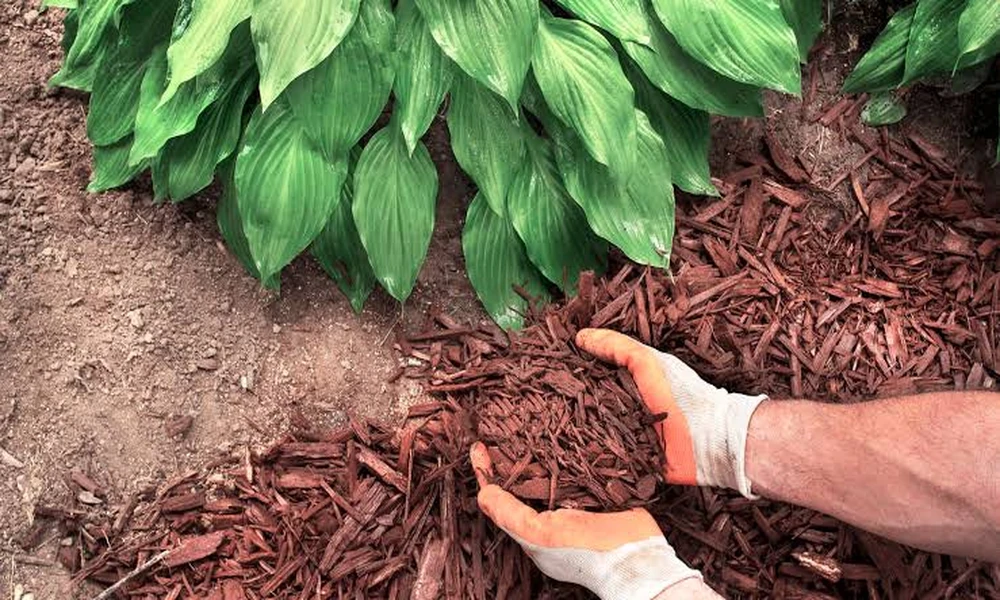
Bark chippings and mature garden compost both cover bare ground around a fruit tree, yet they arrive with different textures, handling needs and expectations. One gardener wants a durable covering that needs little replenishment; another has well-rotted material available from the compost heap and wants to put it to use. The choice is more useful when it begins with those practical aims, rather than the colour of a bag or the promise of a perfectly tidy circle.
Mulching places material on the soil surface. It helps manage the conditions beneath a tree, but the result depends on what is used, how it is applied and whether anyone looks below it afterwards. In British gardens, that means allowing for wet periods as well as dry spells, checking the source of organic material and recognising that a layer changes as it decomposes. Choosing well includes planning how to inspect, top up or alter it over time.
In its summer care guidance, Fruit-Trees, a specialist fruit nursery, highlights mulch as a way to conserve moisture and reduce weeds around trees. Those are useful aims, but choosing a material also involves its condition, the work of carrying it and the way the layer will be checked after application. A gardener preparing to buy fruit trees needs to treat mulch as a managed surface covering, with a suitable depth and a clear space around the trunk, rather than as a decorative finishing touch.
The important comparison is between materials suited to the actual job. Decide whether the priority is lasting weed suppression, using sound homemade compost or making routine care easier, then examine the available options against that purpose before ordering a large quantity.
Buy Fruit Trees with a Plan for the Mulch Around Them
Begin by separating mulch from the other materials used in gardening. Mulch describes a surface covering and its role; it does not identify one particular substance. Garden compost is decomposed organic material commonly used to improve soil or cover its surface. Potting compost is a growing medium formulated for roots in containers. Fertiliser supplies nutrients. These categories sometimes overlap in their effects, but purchasing one does not automatically provide everything expected from the others.
The first decision is what needs improving around the tree. If annual weeds repeatedly colonise bare soil, a sufficiently continuous covering may reduce the work of removing them. If the ground dries quickly, conserving moisture is useful, though water still has to reach the root area. If the main aim is to use mature compost already made at home, inspect that material before buying an alternative. A thin scattering chosen only for appearance may not achieve the intended task. Equally, spreading a large surplus merely because it is available gives no assurance of a better result. The plan should relate the material and its depth to a defined area and a clear purpose.
Keep this decision at the surface. A fruit tree’s roots do not need the surrounding ground repeatedly dug over to accommodate each new layer. Applying woody material above the soil differs from mixing it into the root zone. Washington State University Extension distinguishes these uses because incorporating carbon-rich woody material can reduce available nitrogen, while surface mulch has much less effect on nutrients beneath it. For the gardener, the useful action is to leave the chosen covering where it belongs and obtain separate advice if the soil itself needs attention. Mulch also leaves the root area available for inspection: it should be possible to move a little aside, assess conditions and replace it without turning a routine check into major disturbance.
Compare the Material You Have, Not Just Its Name
Bark and woodchip are related options, but the names do not describe identical products. Bagged bark often has a reasonably consistent particle size, while a load of chipped woody prunings may contain a varied mixture. Coarse woody material generally decomposes slowly and provides a lasting surface layer. Look at the actual product, including how easy it will be to spread around the planting and whether its appearance is acceptable in the position where it will remain.
Mature garden compost has a finer, more broken-down character. The RHS describes ready compost as dark and crumbly, with an earthy woodland smell. It is useful as a surface covering and adds organic matter as it becomes incorporated naturally into the soil. Large recognisable pieces that have not finished decomposing can be returned to the heap. An unfinished mixture should not be treated as equivalent to mature compost simply because both have come from the same bin.
A gardener with several trees and a reliable supply of suitable woody chippings may value a layer that lasts. Someone tending one tree beside a productive compost heap may prefer the mature material already available. The comparison includes the effort of obtaining and spreading it, its likely need for renewal and the ability to check the soil underneath. These practical differences matter more than matching a neighbour’s garden.
Some materials deserve individual checks. Fresh woody chips vary with their source and composition, so follow guidance appropriate to that material and the plants around it. The RHS gives more specific advice for different woody sources than a simple instruction to use or reject all fresh chippings. If the origin is unclear, ask the supplier. Uncertainty about one available load is a reason to clarify its suitability, not evidence that every woody mulch is unsuitable.
Check Quality and Quantity Before Arranging a Delivery
Knowing where material comes from helps avoid importing a problem. Ask what is included in a bulk load and how it has been stored. With manure or compost, maturity, weed contamination and possible weedkiller residues matter. RHS guidance notes that some manures and composts have been affected by herbicide contamination; where this is suspected, seek advice and follow an appropriate testing procedure before spreading it. Cheap or freely available material still needs to be suitable for the garden.
Estimate the amount from the surface area and intended depth. For example, covering two square metres with a five-centimetre layer requires about one hundred litres before allowing for settling or uneven ground. That is simply area multiplied by depth, with cubic metres converted to litres; it is a quantity example, not a universal recommended depth for every mulch. It also shows why a small-looking planting area may need more material than expected. Compare products by their stated volume and the area they will cover at the appropriate depth. A large bag with a light, coarse material and a smaller, denser bag are difficult to compare by appearance alone. Measure the area that actually needs covering, leaving the trunk gap out of the calculation where practical.
Consider how the material will reach that area. A delivery beside the front gate is convenient only if it can be moved without blocking access. Check whether bags are manageable, whether a wheelbarrow route exists and where spare material will be kept. A small garden may be better served by several manageable bags than a bulk load that exceeds its needs. For a larger planting, a suitable bulk supply may reduce repeated handling and journeys. Compare the whole job: useful volume, delivery position, carrying distance and likely surplus. This turns an attractive quoted price into a realistic purchase decision.
Lay the Covering Over a Prepared Surface
Clear existing weeds before mulching and check the moisture of the soil. A covering is most useful when it helps retain water already present; laying it over very dry ground does not supply that missing moisture. Avoid working over frozen soil or treating a persistently waterlogged area as though a different surface finish will correct its drainage. Address the conditions found before concealing them beneath a new layer.
Select a depth appropriate to the material. RHS guidance distinguishes finer, well-rotted organic mulches from coarser woody chippings, which have a different structure. Use the relevant recommendation and spread an even layer. A few generous heaps separated by exposed patches do not provide the same covering as the intended depth across the whole area. Check several places as you work rather than estimating from the deepest point.
Keep material clear of the trunk. RHS tree-planting advice leaves a gap around the stem so mulch does not remain pressed against bark. The purpose is easily lost when the final handfuls are used to make a neat slope upwards. Finish with the trunk base visible, and check it again after watering or disturbance has moved loose material. A surface covering belongs over the soil, not against the tree.
If using a sheet mulch, consider how water reaches the roots and how the sheet will be maintained. A waterproof covering is unsuitable for simply hiding the ground around a tree. Permeable materials still need inspection for damage, weeds growing through openings and later removal. Do not add a sheet automatically underneath loose mulch without deciding what extra purpose it serves and whether future access remains straightforward.
Work carefully around existing roots and equipment. Avoid carving a deep edge through the root area to hold material in place. Spread by hand near vulnerable features, keep irrigation outlets accessible and avoid unnecessary digging or compaction.
Look Beneath the Layer During Ordinary Care
A mulched surface does not remove the need to inspect the soil. Move a little material aside and check whether the ground beneath is moist enough for the tree. After watering, confirm that moisture has reached below the covering instead of judging by its darkened appearance. The check is particularly helpful after the first application, when the gardener is learning how the selected material behaves during rain and irrigation.
Keep the observation proportionate. A new layer that looks dry on top may cover moist soil, while a damp surface does not prove that the root area has received enough water. In a hypothetical garden with two similar apples, one circle might receive direct rainfall and the other sit partly beneath an overhanging structure. Identical mulch and identical watering time would not guarantee identical conditions. Respond to what is found at each tree instead of imposing one routine because the surfaces look alike.
Weeds still deserve attention. Some arrive as new seedlings in the covering, while persistent weeds may emerge from below it. Remove small weeds before they become established and avoid deep hoeing close to permanent roots. If the same patch repeatedly breaks through, investigate the underlying weed problem rather than repeatedly hiding the growth beneath more material. A mulch that reduces weeding has done useful work even though it has not eliminated every future weed.
Decomposition is also normal. Fungal threads in organic material are not by themselves evidence that the tree has a disease; many fungi are breaking down the mulch. Look at the whole situation before deciding that the covering must be removed. If the tree itself shows worrying symptoms, seek a diagnosis based on those symptoms and the growing conditions. Conversely, do not assume every fungus is harmless merely because decomposers are common. The useful distinction is between observing ordinary change in the surface material and explaining an actual problem with the tree.
Renew According to Condition and Keep the Choice Flexible
Before adding fresh mulch, assess what remains of the previous layer. Material may have decomposed, moved away from exposed patches or accumulated in a thicker band elsewhere. Redistributing what is already present may solve part of the problem. Top up where the covering has genuinely thinned, using the appropriate final depth as the guide. An annual delivery does not mean the entire quantity needs to be applied regardless of the layer beneath it.
Review whether the chosen material still serves its purpose. Perhaps coarse chippings have remained useful and the next job is simply filling a few gaps. Perhaps the household now has mature compost available and wants to use that in a suitable part of the garden. Switching materials does not require digging the old layer into the tree’s roots or building an excessive stack of both. Consider their combined depth and condition, and remove unsuitable debris before adding anything. If a layer repeatedly blows or washes away, the answer may involve changing how the surface is managed or choosing a more appropriate material; continuing to replace it without investigating the cause wastes effort. Use the experience of the actual site to refine the next choice.
The final comparison is therefore broader than bark against compost in a bag. Suitable material, a manageable quantity and careful application must work together, followed by occasional checks beneath the surface. For one gardener, a durable woody covering will make routine care easier. For another, renewing a modest layer of mature homemade compost will fit the available resources better. Choose the arrangement that protects the soil while keeping the tree accessible and its needs visible. There is no advantage in a perfect-looking finish that prevents observation. A useful mulch earns its place through the conditions it maintains and the work it saves, with renewal guided by what has changed since the last application.
