

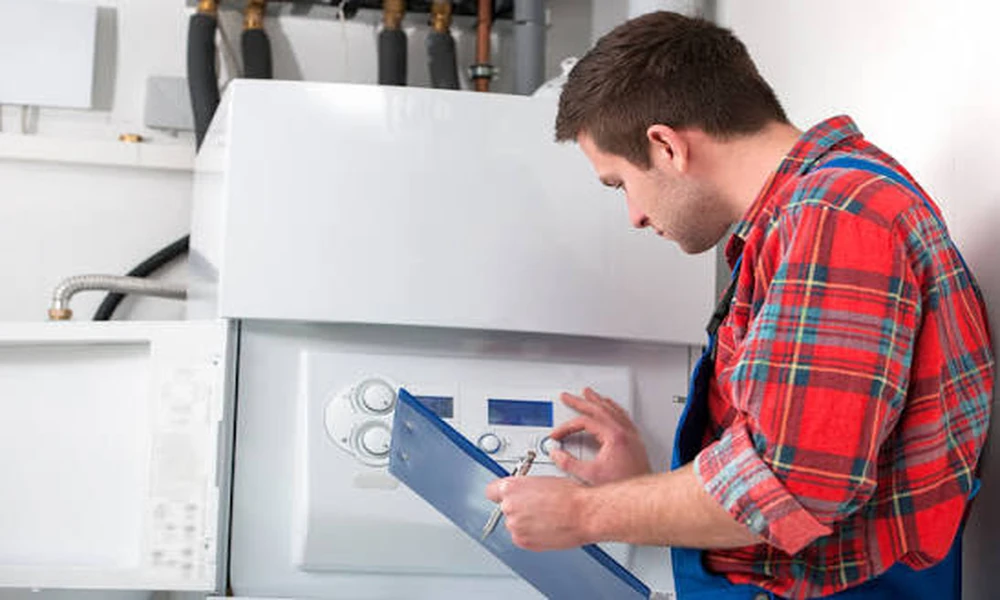
Your furnace ran fine last winter. Or it seemed to. Then the first real cold snap hits and suddenly it’s cycling every ten minutes, one room is a sauna, and the bedroom you sleep in feels like a garage. That pattern is not random. It is your system telling you something.
Most homeowners wait too long. They pay for repair after repair on a unit that’s already past its useful life, spending far more than a replacement would have cost. This guide gives you the diagnostic tools to stop guessing and make the call with real numbers behind it.
The Age Line You Should Not Ignore
Age is the single most reliable predictor of imminent failure. A DOE-funded study published through the U.S. Department of Energy’s Office of Scientific and Technical Information analyzed nearly 40,000 field data points and found that residential gas furnaces carry a median lifetime of roughly 17.5 years. That number doesn’t mean your furnace dies at 17. It means by that age, the statistical probability of a major failure starts climbing fast.
If your unit is 15 years old or older, treat every repair call differently than you did at year five. At that age, you are not buying more life out of the system. You are borrowing it.
Electric furnaces tend to outlast gas units, sometimes reaching 25 years or more, because they skip the combustion cycle that wears down heat exchangers. Oil systems land in the middle. Knowing your fuel type and your installation year is the starting point for everything else in this article.
The 5-Year Cost Stack: A Framework Worth Running
Before you approve any repair on a furnace that is older than 12 years, run what we call the 5-Year Cost Stack. It works like this: add up every repair bill from the past three years, then multiply your most recent annual utility bill by 1.15 to account for the efficiency drop a degrading system carries. Project that forward five years. Compare the total to the installed cost of a new high-efficiency system.
In most cases, the crossover point sits somewhere around year 15 to 17. Past that line, the 5-Year Cost Stack almost always favors replacement. The math shifts because new high-efficiency gas furnaces carry AFUE ratings of 90 percent or higher, while a furnace pushing 15-plus years can be operating as low as 56 percent efficiency. You are not heating your house with the other 44 percent. You are paying for it and getting nothing back.
Run the stack before the next repair. Not after. That order matters.
Warning Signs That Are Not About Age
Age tells part of the story. Behavior tells the rest. These five signals warrant a professional evaluation regardless of how old your system is.
- Uneven heating. Two rooms cold, one room hot, and your thermostat sitting at 72. This points to duct problems, a failing blower motor, or a system that’s too small for your square footage.
- Short cycling. The system fires, runs for two or three minutes, shuts off, then starts again. Short cycling shreds the heat exchanger and the blower over time. It almost always traces back to a clogged filter or a unit that was oversized at installation.
- Rising energy bills with no change in usage. A 20 to 30 percent year-over-year spike in your heating bill, when your household habits haven’t changed, is a mechanical red flag.
- Yellow or flickering burner flame. A healthy gas furnace burns blue. Yellow means incomplete combustion and a potential carbon monoxide risk. Do not ignore this one. Call a tech the same day.
- Frequent repairs in the last two years. One repair is normal. Two or three in back-to-back seasons means the system is failing by parts.
Fuel Type Is Shaping the Replacement Decision Too
The landscape of home heating fuels is shifting, and that shift is worth factoring into any replacement decision you make today. According to the U.S. Energy Information Administration’s October 2025 analysis, 42 percent of U.S. households now report electricity as their main space heating fuel, up noticeably from prior years, while natural gas has declined from 49 percent of homes in 2010 to 47 percent in 2024. The shift is partly demographic but also reflects heat pump technology improving faster than most homeowners realize.
If you’re replacing a gas furnace in a climate like the American Southeast, a heat pump is worth a serious look. In a mild winter climate, a modern heat pump handles the full heating load efficiently. In areas that see extended freezes, a dual-fuel system pairing a heat pump with a gas backup is often the right call. Your fuel choice at replacement locks in your operating cost profile for the next 15 to 20 years. Choose for where energy pricing is heading, not just where it is today.
“Our measurements indicate that improper installation could increase household energy use for space heating and cooling on the order of 30 percent over what it should be.”
Piotr Domanski, NIST researcher, as reported by the National Institute of Standards and Technology
That quote matters for replacement decisions because a new high-efficiency unit installed badly will perform like an old low-efficiency one. The equipment grade only matters as much as the installation quality behind it.
Why Installation Quality Defines the Next 15 Years
This is where most homeowners leave real money on the table. They research the unit, compare AFUE ratings, pick a good brand, and then accept the lowest bid without asking about the installation process. ENERGY STAR notes that improper installation can reduce system efficiency by up to 30 percent, adding unnecessary costs to your utility bills and potentially shortening the equipment’s life. More than half of all HVAC systems in U.S. homes are believed to perform below rated efficiency because of installation issues.
The right contractor sizes the system to your actual square footage, not the unit your neighbor has. They check static pressure in your duct system, verify airflow rates, and seal every duct connection they touch. That last step alone can recover 20 to 30 percent of the efficiency you’d otherwise lose through leaks. Ask any contractor you interview whether they follow ACCA Manual J load calculation procedures. If they give you a blank look, call the next one on your list.
Homeowners in Greenville and the surrounding Upstate area deal with a specific challenge: the region sees cold enough winters to put real demand on a gas furnace, but mild enough stretches that a poorly sized system short-cycles constantly. That short-cycling pattern is where heat exchangers crack and where 15-year lifespans quietly become 10-year lifespans. For anyone evaluating residential heating services in Greenville, the sizing and installation process is worth more scrutiny than the brand name on the box.
A Practical Checklist Before You Call a Contractor
Pull this together before your first appointment. It shortens the diagnostic conversation and helps you spot when a tech is cutting corners.
- Find the manufacture date on your unit’s nameplate or serial number. Write it down.
- Pull your last three years of energy bills from your utility’s online portal and note any year-over-year increases in heating months.
- List every repair, the date, and the cost. Total that figure.
- Check your air filter right now. A clogged filter causes or masks several of the warning signs listed above.
- Note where in the house your heating feels uneven. Room-by-room notes help a tech identify duct or airflow problems faster.
Bring that list to the appointment. A contractor who doesn’t ask about your repair history or walk your duct system before quoting a replacement is telling you something about how they work.
One More Thing Before You Decide
Replacement and repair are not always a binary choice. If your system is 12 years old with one expensive failure, repair may still make economic sense. If it’s 18 years old with two repairs in two years and rising bills, the 5-Year Cost Stack will almost certainly tell you to replace. The goal is not to get the most years out of your existing unit. The goal is to spend the least total money over the next decade while staying warm. Those are different objectives, and they sometimes point in opposite directions.
Run your numbers. Know your age. Watch your behavior signals. And pick a contractor who treats the installation as seriously as you treat the equipment decision.
