

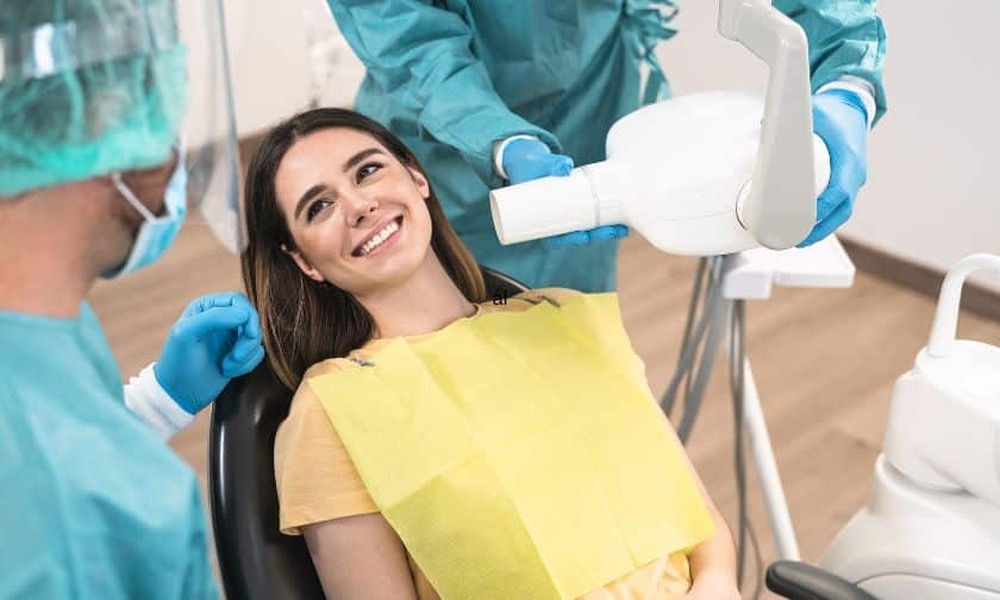
You might be feeling a little lost every time you sit in the dental chair. The dentist explains something about enamel, gum health, or a possible treatment, you nod along, but a part of you is still thinking, “Do I really understand what is happening in my own mouth?” If that sounds familiar, you are not alone. Whether you are seeing your regular provider or an emergency dentist Schaumburg, many people leave their appointments with more questions than answers and a quiet worry that they missed something important.end
At the same time, you probably sense that things are changing. Screens in treatment rooms, digital X-rays that appear instantly, animated videos that show cavities forming in real time. It can feel like a lot. Because of this tension, you might wonder whether all these digital tools are actually helping you understand your oral health, or if they are just more “tech” to smile at
The truth is, when used well, general dentistry patient education with digital tools can turn a confusing, stressful experience into one where you feel informed, respected, and in control. You get clearer explanations, better visuals, and resources you can review at home, instead of trying to remember everything from a quick conversation in the chair.
So, where does that leave you as a patient who simply wants to know what is going on, what your options are, and how to make good decisions without feeling rushed or overwhelmed.
Why Traditional Dental Explanations Often Leave You Confused
Think about the last time a dentist described a cavity or a cracked tooth. You might have heard words like “occlusal,” “restoration,” or “periodontal pockets.” You may have seen a tiny black-and-white X-ray that meant a lot to the dentist but almost nothing to you. You probably nodded, trusted their expertise, and hoped you understood enough to say yes or no to treatment.
Here is the problem. When you cannot clearly see or understand what is wrong, every decision feels like a guess. That uncertainty can create stress. You might worry that you are agreeing to something you do not really need. Or you might delay important care because it does not feel real or urgent.
Now add in the emotional side. Dental visits already trigger anxiety for many people. The sound of tools, the smell of the office, the feeling of being vulnerable in the chair. If explanations are rushed or too technical, the anxiety grows. You may leave with clean teeth but a heavy mind.
So what changes when a general dentist uses modern digital tools for patient education instead of only words and hand gestures?
How Digital Tools Turn Confusion Into Clarity
Imagine you point to a sensitive tooth. Instead of a vague explanation, your dentist takes a quick digital image that appears on a screen right in front of you. They zoom in, circle the area of concern, and compare it to a healthy tooth. Suddenly, you are not guessing. You are seeing.
Now imagine that before you choose a treatment, you watch a short, simple animation that shows exactly what will happen. You see how a cavity forms, how a filling works, and what could happen if the problem is ignored. That is what modern digital patient education in general dentistry looks like when it is done with care.
There are high-quality tools designed specifically to help you understand. For example, some dentists use patient education videos similar to the ones found in the Toothflix dental education video series. These types of animations break down complex ideas into clear, visual stories. You are no longer trying to picture a procedure in your mind while the dentist talks. You can actually see it.
Others share trusted online resources that explain conditions and treatments in plain language, like the information available through the ADA’s patient materials at For the Patient. That means you can go home, re-read what you heard, and talk it over with your family without relying only on memory.
Because of these tools, the conversation changes. It moves from “Just trust me” to “Here is what I see, here is what it means, and here are your choices.” You shift from passive listener to active partner in your own care.
What Do Digital Dental Education Tools Actually Change For You
It helps to see the difference between a traditional experience and a digitally supported one. You might be wondering if it really matters or if it is just window dressing. The comparison below focuses on what you feel and what you gain as a patient.
| Aspect of Your Visit | Traditional Explanations Only | Digital Education Tools In General Dentistry |
|---|---|---|
| Understanding your diagnosis | Relies on verbal descriptions and small X-rays that are hard to read. | Uses enlarged images, animations, and clear visuals so you can actually see the problem. |
| Emotional comfort | Uncertainty about what is happening can increase anxiety. | Clear visuals and step-by-step explanations reduce fear of the unknown. |
| Decision making | You may feel you are guessing or just agreeing out of pressure. | You understand options and likely outcomes, so choices feel grounded and confident. |
| Learning style support | Primarily supports people who learn best by listening. | Supports visual, auditory, and reading-based learners with multiple formats. |
| What you remember later | Easy to forget verbal explanations once you leave the office. | Videos, printed summaries, or links to trusted sites allow you to revisit information at home. |
| Long term oral health | Education may be limited to quick instructions at the end of a visit. | Ongoing digital resources help you learn how to prevent problems, not just fix them. |
When a general dentist uses technology thoughtfully, your visit becomes a two-way conversation. You can point, ask, reply, and clarify. You are no longer trying to decode professional language on the spot. That shift alone can lower stress and build trust.
How Can You Use These Tools To Protect Your Own Health
Technology by itself does not guarantee a better experience. What matters is how you use it and how your dental team invites you into the process. Here are three simple, practical steps you can take to get the most from modern general dental care.
1. Ask to “see what they see” on the screen
When your dentist or hygienist takes digital X-rays or intraoral photos, ask them to show you and walk you through what they are looking at. You might say, “Can you show me where the problem is on that image?” or “Can you show me the difference between healthy and unhealthy areas?”
This one request turns a silent moment into a teaching moment. You begin to recognize patterns in your own mouth over time. That awareness often leads to better daily habits because the problems feel real, not abstract.
2. Request visual explanations for any recommended treatment
If a filling, crown, or gum treatment is suggested, ask for a visual explanation. Many offices can show animations similar to those in the Toothflix style patient education videos. Others may have diagrams or short clips that explain the procedure.
You might say, “Is there a video or picture that shows how this treatment works?” or “Can you show me what happens if we wait?” Seeing the process often makes the decision clearer and reduces the fear of the unknown.
3. Take home or bookmark trusted digital resources
Good education does not end when you leave the office. Ask your dental team if they can recommend websites or printable materials you can review later. Many rely on resources similar to the ADA’s patient information at For the Patient, which are written in plain language and based on solid science.
You can say, “Do you have a link I can read at home about this condition?” or “Is there a page that explains this treatment in simple terms?” Having these materials means you can slow down, think through options, and talk with family before you decide.
Where Does This Leave You As A Dental Patient
You do not need to become a dental expert. You do deserve to understand what is happening in your own mouth. Modern digital education in general dentistry is not about fancy gadgets. It is about giving you clear pictures, simple words, and honest choices so you can care for your health with confidence.
If you have felt rushed, confused, or unsure in past appointments, it is reasonable to want something better now. Ask to see images. Ask for videos. Ask for links you can read at home. A good dental team will welcome those questions. They know that when you understand, you are less anxious, more engaged, and more likely to stay healthy between visits.
You are allowed to slow the conversation down until it makes sense. You are allowed to say, “Can you show me?” and “Can you explain that again in a different way?” With the right digital tools and a willing general dentist, your next visit can feel less like a mystery and more like a partnership in your own care.
