

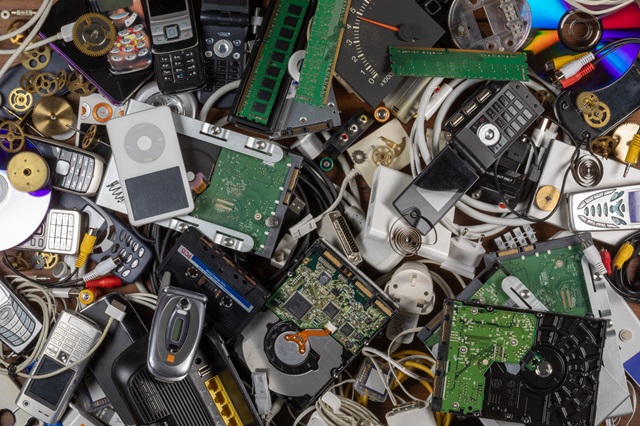
Listen, you walk through your flat right now and count the dead electronics gathering dust. That drawer full of old phones. The laptop you swore you’d fix. The tangle of chargers for devices you no longer own. You tell yourself you’ll deal with it eventually, but eventually never comes, does it? The truth about e-waste recycling Singapore is that it’s not complicated at all. What’s complicated is admitting we’ve become a nation drowning in our own technological affluence, too lazy or too guilty to face what we’ve consumed and discarded. The system exists. The infrastructure waits. What’s missing is the will to act.
The Rot We’ve Created
Singapore generates roughly 60,000 tonnes of electronic waste annually. That’s about 10 kilograms per person. Think about that weight. Ten kilograms of screens, circuits, batteries, and plastic casings for every man, woman, and child on this island. We pride ourselves on efficiency, on cleanliness, on being a first-world nation, yet we hoard broken gadgets like some kind of digital pack rats, storing obsolete technology in cupboards as if keeping it out of sight absolves us of responsibility.
The devices pile up because disposing of them properly requires effort. Not much effort, mind you, but enough that most people can’t be bothered. It’s easier to shove that dead phone in a drawer than drive to a collection point. It’s simpler to throw a broken keyboard in the rubbish than look up proper disposal methods. We’ve engineered convenience into every aspect of modern life except the one that matters most: cleaning up our own mess.
How the System Actually Works
Here’s what nobody wants to tell you outright: e-waste recycling Singapore is deliberately made accessible, and you still can’t be bothered to use it. The infrastructure exists at multiple levels:
- Collection bins sit in community centres, shopping malls, and retail outlets across the island. You pass them regularly. You’ve probably walked by three today without noticing.
- Retailer take-back programmes accept old electronics when you purchase new ones. They’ll take your obsolete phone when you buy the latest model, handling disposal while you’re already there.
- Scheduled collection services will come to your door for larger items. Televisions, computers, air conditioners. You make one phone call and they handle the rest.
- Corporate collection for businesses generates most of the volume. Offices upgrading equipment can arrange bulk pickups that process hundreds of units at once.
The system works. The question is whether you do.
What Happens After You Finally Act
Once electronics enter the recycling stream, they undergo disassembly that’s part surgery, part archaeology. Workers extract components with value: circuit boards rich in gold and copper, screens containing recoverable materials, batteries requiring careful handling to prevent fires and chemical releases. The process separates what can be reclaimed from what must be disposed of safely.
Precious metals get refined to purity levels suitable for manufacturing. A tonne of discarded mobile phones yields more gold than a tonne of gold ore. That’s not metaphor or exaggeration. It’s geological fact. We discard more concentrated wealth than miners extract from the earth, yet we treat electronics as disposable rather than valuable.
Plastics go to recycling facilities where they might become new housings or entirely different products. Rare earth elements, expensive and environmentally destructive to mine, get recovered for reuse in new electronics. Hazardous materials like lead, mercury, and flame retardants receive treatment that prevents soil and water contamination.
This elaborate recovery system exists because materials in electronics are too valuable and too dangerous to waste. Yet the system only works if you participate. All the infrastructure in the world means nothing if gadgets rot in drawers.
Why You Don’t Do It
The reasons people give for not engaging in e-waste recycling Singapore reveal more about character than logistics. They claim ignorance of collection points despite smartphones that could locate the nearest bin in seconds. They cite busy schedules whilst spending hours on social media. They worry about data security on old devices, as if there’s something so fascinating in their browsing history that it requires keeping broken phones indefinitely.
The real reason is simpler and less flattering: disposing of electronics properly requires acknowledging consumption patterns we’d rather ignore. That pile of obsolete devices represents money spent on things we barely used, upgrades we didn’t need, and habits we’re not proud of. Throwing them away, even responsibly, forces confrontation with waste we’ve generated.
The Challenge Laid Bare
Here’s what needs saying plainly: if you consider yourself environmentally conscious, if you complain about climate change or plastic pollution or resource depletion, but you haven’t recycled the dead electronics in your home, you’re a hypocrite. Full stop. No qualifications or excuses. The cognitive dissonance of demanding corporate responsibility whilst hoarding personal e-waste deserves calling out.
Singapore provides the infrastructure. The government mandates producer responsibility. Retailers offer take-back programmes. Collection points dot the landscape. What’s missing is you walking to the bin with the phone you haven’t used since 2018. That’s the gap between rhetoric and action, between claimed values and actual behaviour.
The mechanics of e-waste recycling Singapore are straightforward. Collection exists. Processing works. Recovery succeeds. The complicated part is looking at your consumption honestly and dealing with its consequences. Start there, and the rest becomes remarkably simple.

Jack Sylvester is a freelance writer, He is extremely fond of anything that is related to ghostwriting, copywriting, and blogging services. He works closely with B2B businesses providing digital marketing content that gains social media attention. His aim to reach his goals one step at a time and He believes in doing everything with a smile.
